What Does OSHA Require for Field Sanitation?
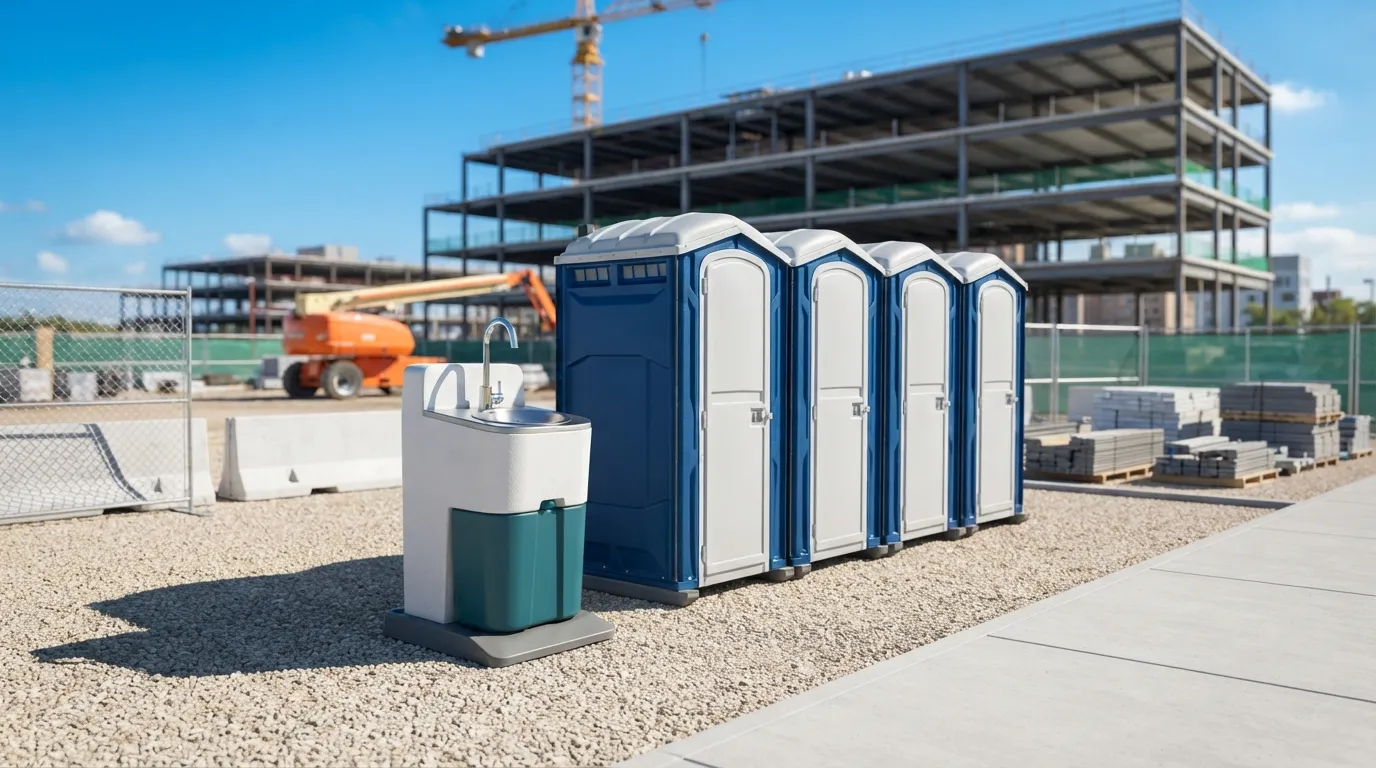
Start with the number: 1928.110 sets one facility per 20 hand-labor employees, reachable within a quarter mile walk, plus potable water under 1926.51(a)(1) and a handwashing setup nearby. That is the baseline whether you are running a produce operation near the coast or a nursery further inland. Costa Mesa Porta Pros treats that quarter mile figure as the layout rule, not a suggestion, and moves units as the crew moves across the field. A standard porta potty rental covers most rows, since each unit carries a 60 to 70 gallon holding tank and stands about 92 inches tall, big enough for regular turnover without daily service. For bigger crews spread over more acreage, we count heads first and place units second, the same math laid out on how many porta potties do I need. Water access matters just as much as the toilet count. If your crew is mixing or applying anything, pair the units with a handwashing station rental, because 29 CFR 1910.141(d)(2) requires soap and towels or a hand-drying device at any washing facility, and sanitizer alone does not satisfy that. Costa Mesa growers running seasonal labor crews lean on portable toilet rental service for exactly this reason: it is the fastest way to stay inside the 1928.110 quarter mile rule without building anything permanent.
Why Do Farms Need Handwashing Stations Separate from Toilets?
Because the two rules cover different exposure. Field sanitation under 1928.110 handles general labor. But if your operation applies paints, coatings, herbicides or insecticides, OSHA 1926.51(f)(1) kicks in separately and requires washing facilities specific to that contaminant exposure, not just a sink near the porta johns. Herbicide and pesticide spraying on Costa Mesa agricultural sites falls squarely into that category. A portable sink rental placed at the mixing station or the loading area answers that requirement directly, separate from the row-crew toilets. We also get asked whether a sanitizer stand covers it. It does not, not under 1910.141(d)(2), which specifically calls for soap and towels or a drying device. If you are unsure which rule applies to your crew, our handwashing requirements page breaks down the difference between general field sanitation and contaminant-specific washing. Farms running mixed operations, some spraying, some just picking, often run both a hand sanitizer station rental for quick touch-points and a full handwash setup near chemical handling. That split keeps you covered under both rules instead of leaning on one station to do double duty.
How Much Does a Farm Restroom Rental Cost in Costa Mesa?
| unit | day | week | month |
|---|---|---|---|
| standard | $100 - $350 | $130 - $500 | $125 - $325 |
| ada | $200 - $400 | $200 - $400 | - |
Standard units run cheaper by the week than by repeated single days once a harvest season stretches past a few weeks, and monthly rates hold steady for operations that run units on-site through a full growing cycle. If your crew includes anyone needing accessible facilities, ADA Standards section 213.2 requires at least one accessible unit in any cluster of portable toilets, never fewer than one regardless of cluster size. Our ADA accessible porta potty units meet that standard with a 60 inch turning circle per ADA 304.3.1 and a 32 inch minimum door opening under ADA 404.2.3. Delivery runs a separate fee on top of the unit rate, and most Costa Mesa farm accounts land in the standard delivery band rather than the rush pricing. For exact seasonal numbers tied to your acreage, check porta potty rental cost or run the weekly math against porta potty rental per day. Longer operations, especially multi-month plantings, usually do better on monthly porta potty rental than resetting a short-term order every few weeks.
Do I need a permit for farm restrooms in Costa Mesa?
Placement rules can differ depending on where the units sit relative to property lines and any public right of way, and that needs confirming with the city before delivery. We handle that conversation as part of setup. See porta potty permit requirements for the general framework we follow on every site.
How many toilets does a 40-person harvest crew need?
Under OSHA 1928.110, a 40-person crew needs at least two toilet facilities, since the rule is one per 20 workers. Spread that across the field so no one walks more than a quarter mile. Our how many porta potties do I need guide walks through the math for larger crews too.
Can I get water and toilets delivered to a remote field?
Yes. Costa Mesa Porta Pros delivers to field edges and staging areas across Costa Mesa, including sites well off paved access. Nearby operations near Midway City, about 8.8 miles northwest, and Stanton, 12.8 miles northwest, get the same service radius.
What is the difference between a standard unit and a deluxe unit for farm crews?
A standard unit covers basic field sanitation at a lower cost per unit. A deluxe flushable porta potty adds a flush mechanism and a nicer interior, usually chosen for supervisor or office-side use rather than the row crew itself.
How often do farm porta potties get serviced?
ANSI/PSAI Z4.3 sets the baseline at one service visit per week for up to 10 users across a 40 hour week. Larger crews or longer hours need more frequent service. See how often are porta potties cleaned for how that scales with headcount.
Next step
Get a delivery date
Tell us the address, the dates and the headcount. We size the order and confirm the route.