
How many restrooms does a marathon need?
Start with runner count and course length, not a flat guess. OSHA 1926.51(c) sets a construction-site ratio of one toilet for 20 workers, and race organizers in Costa Mesa generally use a similar per-capita approach scaled up for spectators at the finish line. A 5K with 300 runners and a small cheering crowd runs lighter than a full marathon with aid stations every two miles and a beer garden after. Figure separate blocks: start corral, mid-course aid stations, and finish festival, each staffed and serviced on its own schedule. Standard units run $130 to $500 for a week rental depending on how many stations you're covering, and a race-day event rate for a standard unit typically lands between $200 and $800 for the day. If your course crosses into Midway City 8.8 miles northwest or Stanton 12.8 miles northwest, tell us at booking so we can plan delivery around multiple drop points instead of one central lot. Add ADA units at every cluster: ADA Standards 213.2 requires at least 5 percent of clustered single-user units be accessible, never fewer than one, and the unit needs a 60 inch turning circle per ADA Standards 304.3.1. Check our placement guide and the restroom counting tool before you finalize your course map.
Where should race restrooms go on the course?
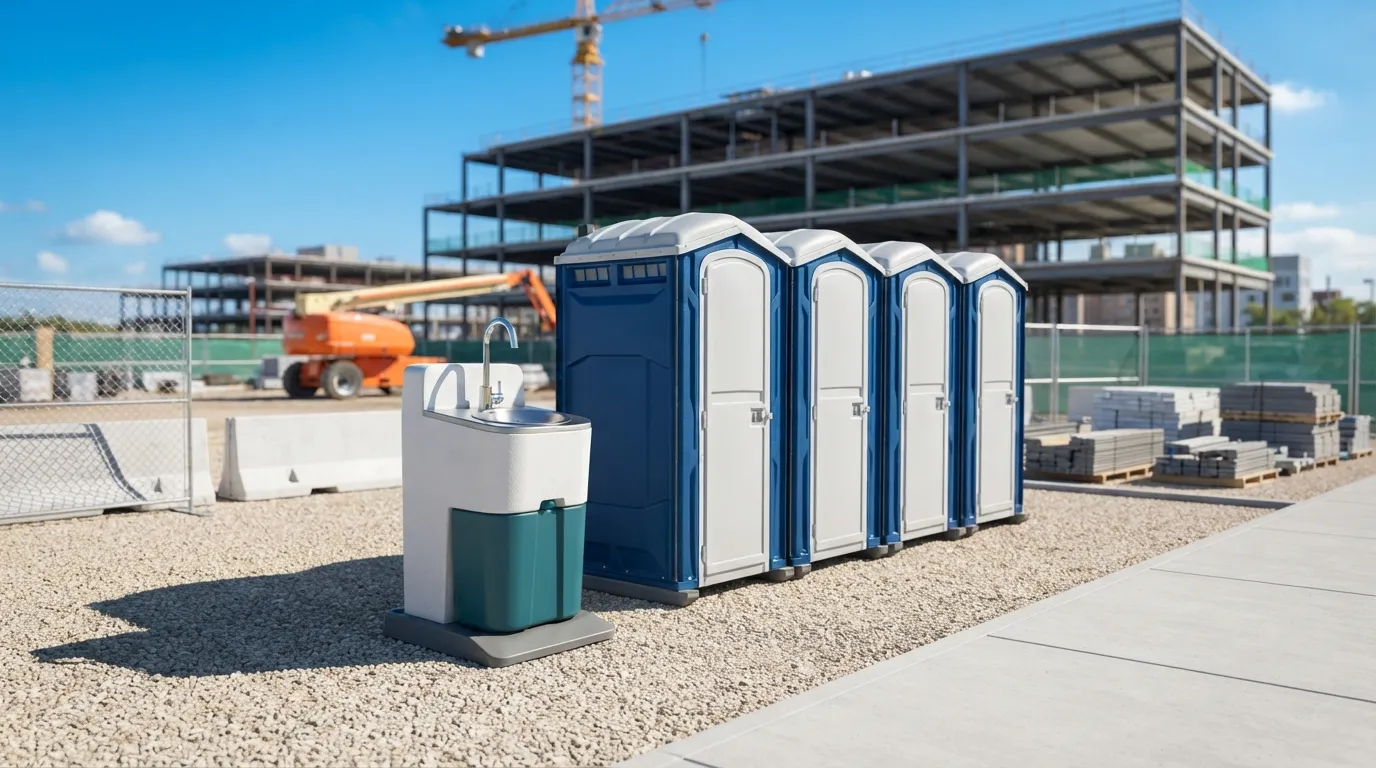
Set them at the start corral, every aid station, and the finish chute, with clear sightlines from the runner's path. Ground needs to be level and firm; ADA Standards 302.1 calls for stable, slip-resistant surfaces, which matters on grass infields or gravel lots near a start line. Leave a 36 inch clear route to each unit per ADA Standards 403.5.1, and make sure any accessible unit has a 32 inch door opening under ADA Standards 404.2.3. If your finish festival includes a beer tent or food trucks, pair standard units with a handwashing station since 29 CFR 1910.141(d)(2) requires soap and towels at wash stations, not just sanitizer. Races with production trailers, timing tents, or a sponsor village often add a temporary power pole to run lighting and sound, and knowing how to brace a temporary power pole matters as much as where you put the restrooms. Brace it the same way a job site would: set the pole plumb in a stable base, guy it with rated cable at two or three points above the load center, and keep the anchor points clear of the runner corridor so nobody clips a line mid-race. Course marshals should walk the fence line and unit placement together, and if you're using crowd control barrier or temporary fencing to route runners past the restroom bank, coordinate the two so barriers don't block the accessible route.
When should restrooms be delivered and serviced for race day?
Delivery the day before gun time is standard, with a service pass mid-morning if your event runs past the four-hour mark. ANSI/PSAI Z4.3 sets a baseline service interval of once per week for light use, but a race day compresses that into hours instead of days: high-traffic aid stations and the finish festival need at least one servicing pass during the event, more if you're running a full marathon with a five-hour course window. Costa Mesa events with a beer garden or a post-race expo should also plan for deluxe flushable units near VIP or sponsor tents, priced from $150 to $290 for a week rental. If your course extends toward Aliso Viejo 14.0 miles southeast for a point-to-point layout, factor that drive time into your service window request. Book through request a quote with your course map and station count, and confirm placement in any public right-of-way with the city since that rule isn't standardized and needs direct confirmation with Costa Mesa before race weekend. For overnight security around expo tents or timing equipment, some organizers add temporary fencing around the finish compound.
How far in advance should we book race restrooms?
Book as soon as your course and station count are locked, ideally weeks out for a marathon-scale event. Costa Mesa races with multiple aid stations need more lead time than a single-block 5K. Confirm your unit count using our placement guide before contacting Costa Mesa Porta Pros.
Do we need ADA units at every aid station?
Yes, if units are clustered at that station. ADA Standards 213.2 requires at least one accessible unit per cluster, never less than 5 percent. Isolated single units along a course still need review against the same standard.
What's the cost difference between day and week rates for race restrooms?
A standard unit runs $100 to $350 for a single day versus $130 to $500 across a week, so multi-day expos save per-day cost over renting fresh each morning. See full cost breakdowns for your event size.
Can we combine restrooms with a restroom trailer for VIP areas?
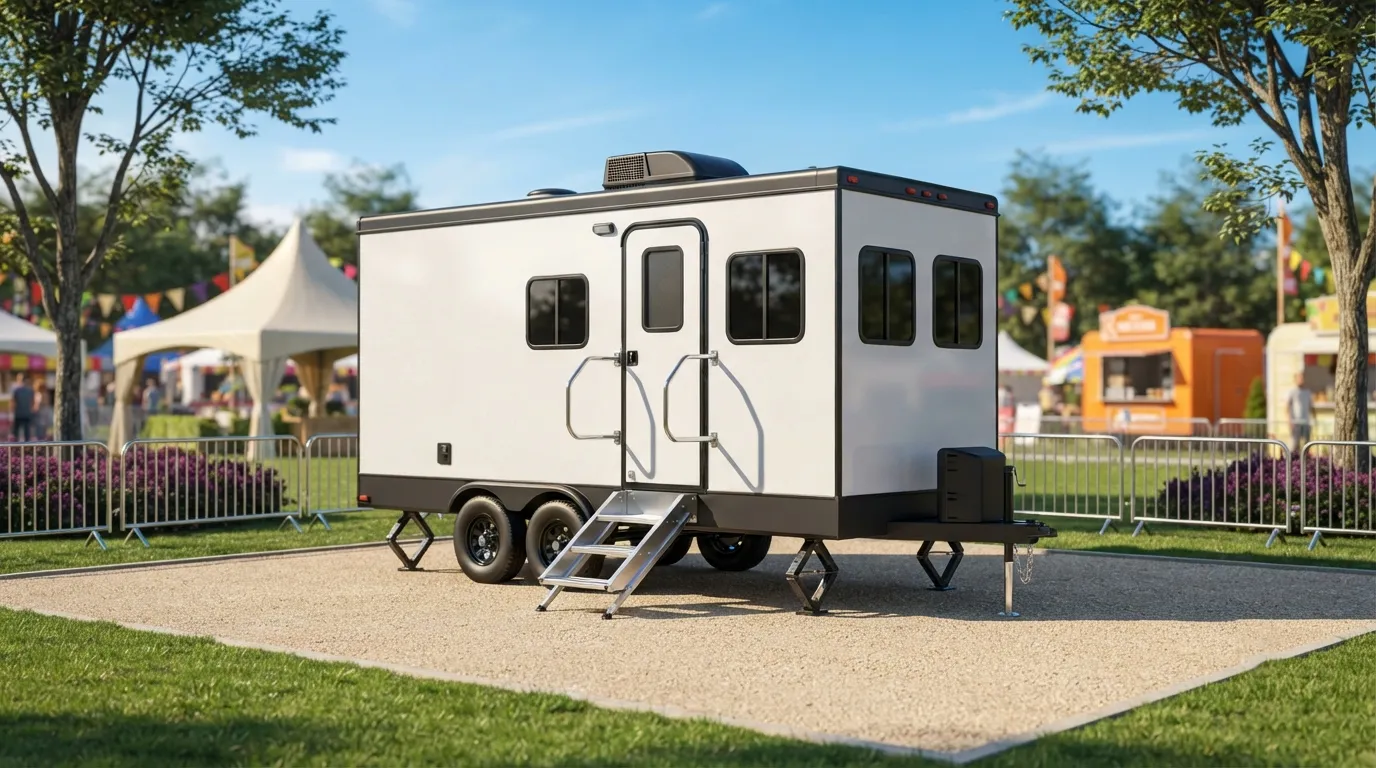
Yes. Many Costa Mesa races pair standard units on-course with a restroom trailer near the finish for VIP or sponsor use, priced separately from standard course units.
Does the city require a permit for restroom placement?
Placement in a public right-of-way needs confirming directly with the city. Costa Mesa Porta Pros can flag likely conflict points on your course map, but the city has final say on permitted zones.
Next step
Get a delivery date
Tell us the address, the dates and the headcount. We size the order and confirm the route.