What does OSHA actually require for handwashing?
Two different rules cover this, and they get confused constantly. OSHA 1926.51(f)(1) requires washing facilities specifically where workers apply paints, coatings, herbicides or insecticides, or handle other contaminants that land on skin. It is not a blanket handwashing law for every construction site. Separately, 29 CFR 1910.141(d)(2) requires soap and towels or a hand-drying device at washing facilities in general industry workplaces; hand sanitizer does not satisfy that requirement on its own. If your Costa Mesa crew is spraying coatings or applying pesticides, you need washing units under 1926.51(f)(1) regardless of headcount. If you are running a general worksite, pair a handwashing station rental with your portable toilet rental so soap and towels are on hand at the same location as the toilets, which OSHA addresses under 1926.51(c). Farms hiring hand-labor crews fall under OSHA 1928.110, which calls for potable water, toilets, and handwashing within a quarter mile walk, at one facility per 20 employees. That is a different math than a jobsite, and it matters for growers running farm and agricultural restrooms in and around Costa Mesa.
How many handwashing stations do I need?
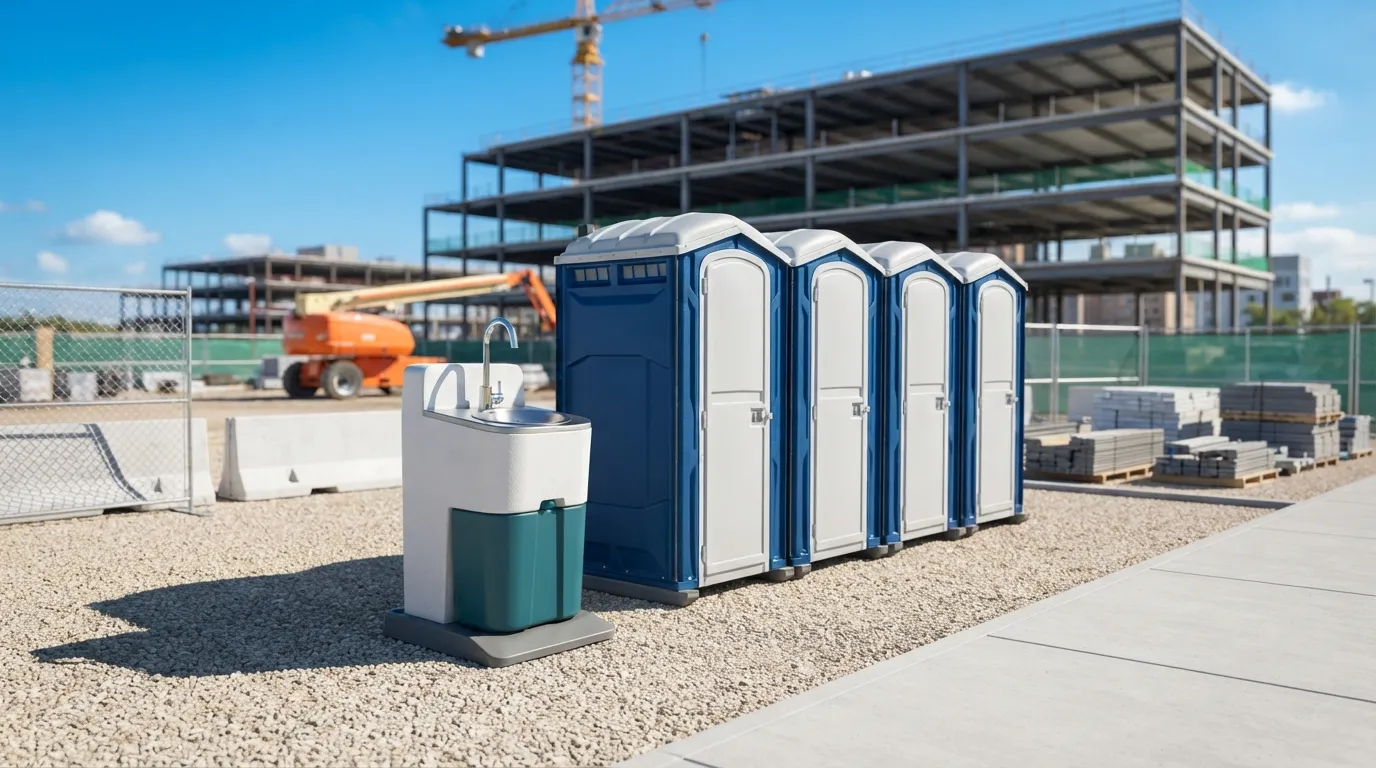
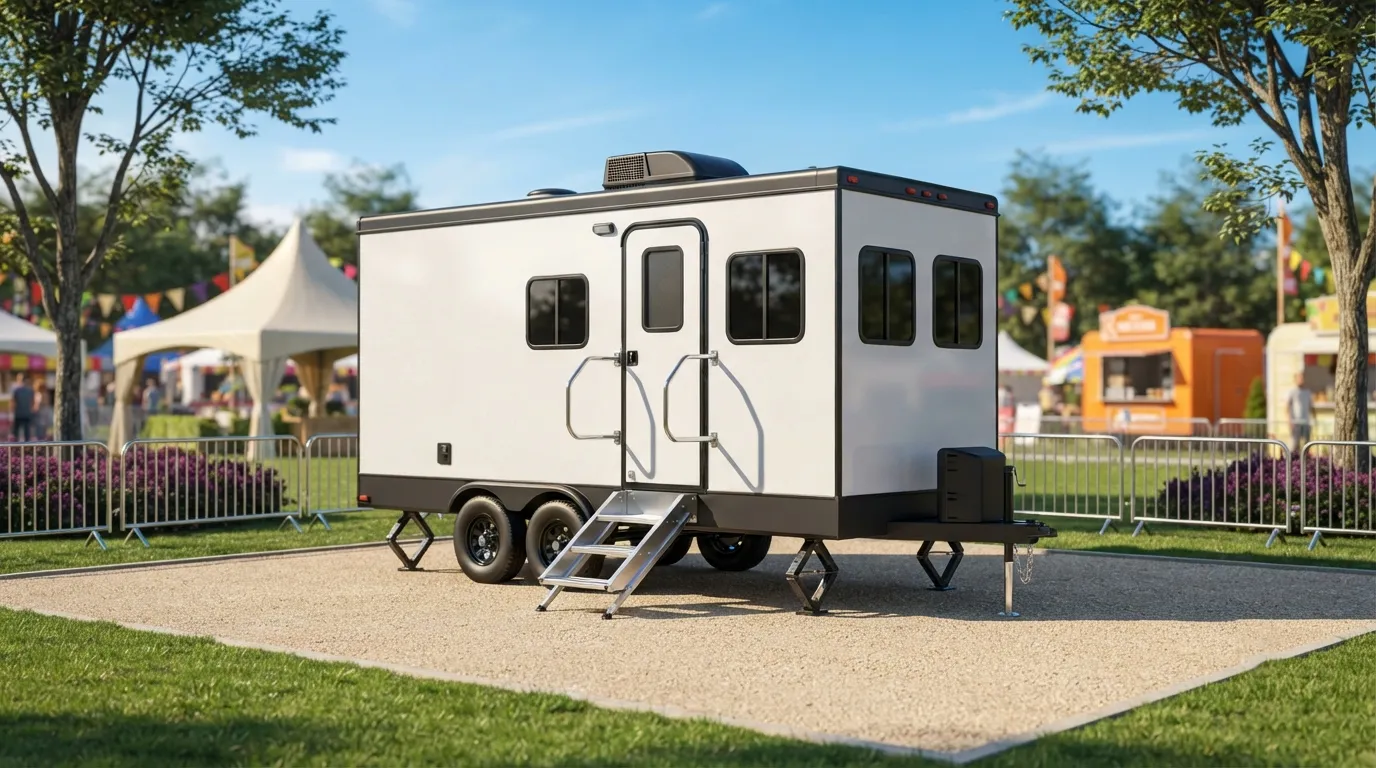
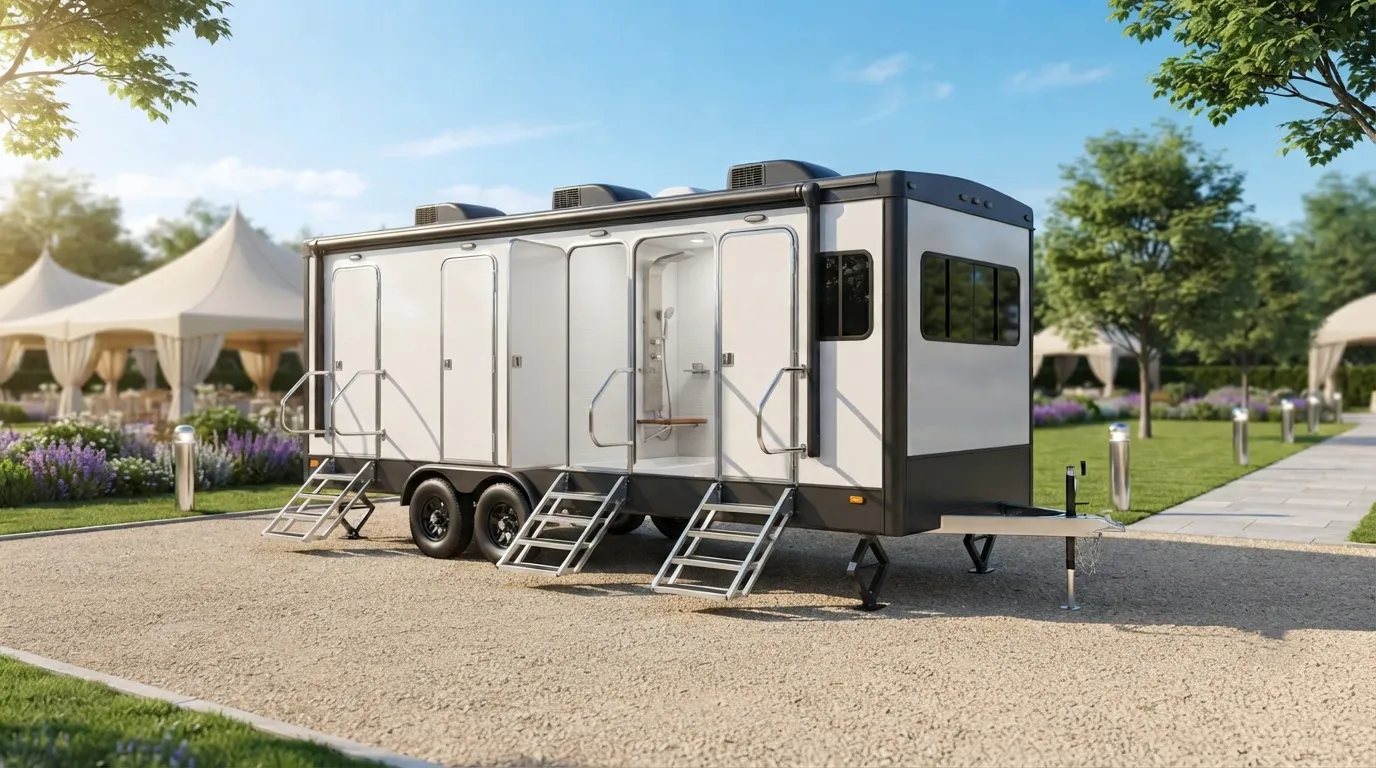
Match stations to your toilet count, not to a guess. OSHA 1926.51(c) sets toilet ratios at one facility for 20 workers or fewer, then one toilet seat and one urinal per 40 workers once you pass 20, and per 50 workers at 200 or more. A practical rule most Costa Mesa contractors use: one handwash station near every cluster of toilets, plus extra units wherever paint, coatings or chemical work happens under 1926.51(f)(1). Event organizers use a looser standard tied to guest count rather than employee count; check our how many porta potties do I need guide for that math, since caterers and food trucks usually want a station within sight of the serving line. A portable sink rental works well for that use since it holds its own fresh water and does not need a hookup. For larger builds, pair a 4 stall restroom trailer or 8 stall restroom trailer with dedicated wash stations so foot traffic does not bottleneck at one sink.
Do I need an ADA accessible handwashing station?
Yes, if you are clustering portable toilets, at least one accessible unit has to be in that cluster. ADA Standards section 213.2 requires 5 percent of clustered single-user toilets to be accessible units, and never fewer than one, no matter how small the cluster. That accessible toilet pairs with an ADA accessible porta potty that meets its own clearance rules: a 60 inch turning circle under section 304.3.1, a 36 inch clear route under section 403.5.1, and a 32 inch door opening under section 404.2.3. Reach ranges matter too. Section 308.2.1 sets a 48 inch maximum and 15 inch minimum forward reach, and section 309.4 requires faucet handles and soap dispensers to work with one hand and no more than 5 pounds of force, so a lever-style pump beats a stiff twist knob. Ground surfaces under the unit need to be stable and slip resistant per section 302.1, which matters on gravel lots around Costa Mesa job sites more than on paved ones. Check our ADA restroom requirements page before you finalize a layout, and see the porta potty placement guide for surface prep tips.
Where should handwashing stations be placed on site?
Put them close enough to be used, not tucked in a corner. ANSI/PSAI Z4.3 sets the baseline service interval at once weekly for up to 10 users across a 40 hour week, so station placement should account for how often a technician can reach the unit for that service, not just how convenient it looks on a site plan. Keep wash stations within a short walk of food handling, chemical mixing, or the toilet cluster itself; stretching that distance defeats the purpose. OSHA 1926.51(a)(1) also requires an adequate supply of potable water at all places of employment, which is the reason our stations arrive with a filled fresh water tank rather than an empty one. If your layout includes a temporary fence rental or crowd control barrier rental for an event, route the wash stations inside the fenced perimeter so they stay accessible without crossing a barricade line under OSHA 1926.202. For jobs running dumpsters too, see roll-off dumpster rental and what cannot go in a dumpster so waste and wash water do not end up mixed in the same disposal stream.
Do I need a permit for a handwashing station in Costa Mesa?
Placement in the public right of way needs confirming with the city before you set anything down. We have not verified a specific Costa Mesa ordinance for handwash unit placement, so check with the city directly. Our porta potty permit requirements page covers the general process for toilet and wash station siting.
Does hand sanitizer count as a handwashing station?
No. Under 29 CFR 1910.141(d)(2), a compliant washing facility needs soap and running water with towels or a hand-drying device. A hand sanitizer station rental is a good supplement near entrances, but it does not replace a real handwashing setup for regulated worksites.
Can I rent just a handwashing station without toilets?
Yes. Caterers, food trucks and small crews often rent a standalone portable sink rental without a toilet order. It still needs its own water refill and soap resupply on a regular service schedule.
How far apart should handwashing stations be from portable toilets?
Close enough that people actually use both. Most Costa Mesa layouts place a wash station within a few steps of each toilet cluster, especially where an ADA accessible porta potty unit sits, since that user may need the shorter walk.
What is the difference between OSHA rules for construction and agriculture?
Construction sites follow OSHA 1926.51(c) and 1926.51(f)(1) for contaminant-specific washing. Farms follow OSHA 1928.110, which sets one facility per 20 hand-labor employees within a quarter mile. Different headcounts, different walking distances, different triggers.
Next step
Get a delivery date
Tell us the address, the dates and the headcount. We size the order and confirm the route.