How do porta potties work?
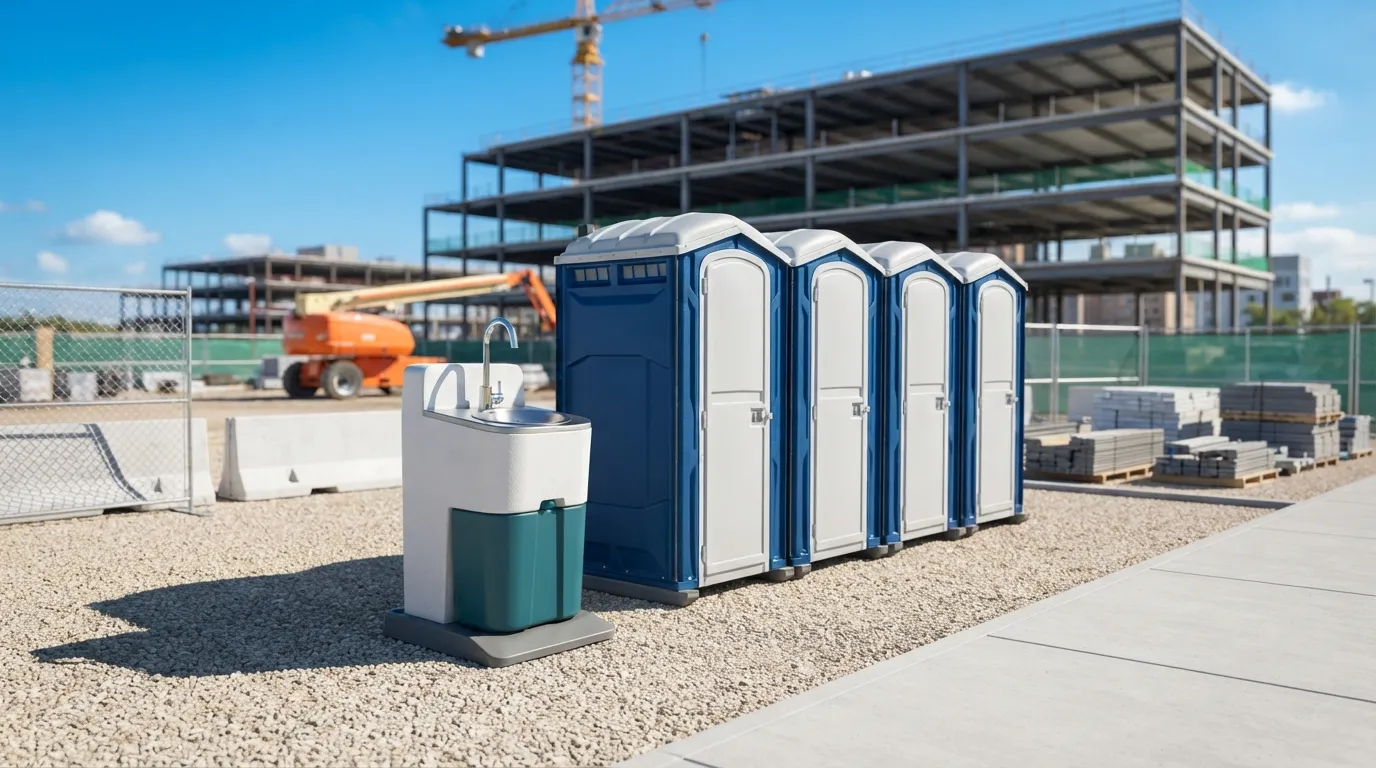
Strip away the branding and a standard porta potty rental is a sealed box over a holding tank, about 44 by 48 inches on the ground and roughly 92 inches tall. Waste drops straight into the tank below the seat. A deodorized blue liquid, the "porta potty chemicals" you'll hear mentioned near any jobsite, breaks down solids and knocks back the smell between services. There's no water hookup and no drain line, which is why these units work on a bare Costa Mesa lot before utilities go in. A roof vent stack does the rest of the odor control, pulling air up through the tank and out above head height. Ask us about portable toilet rental if you're comparing this to a restroom trailer rental, because trailers work differently and need either a water tank or a hookup. For most jobsites and events, the standard tank-and-chemical setup is what a construction worker running to a porta potty actually finds inside: a seat, a tank, and not much else. If you're mapping out coverage for a crew, our how many porta potties do I need guide walks through the math city inspectors expect to see.
How do flushable porta potties work?
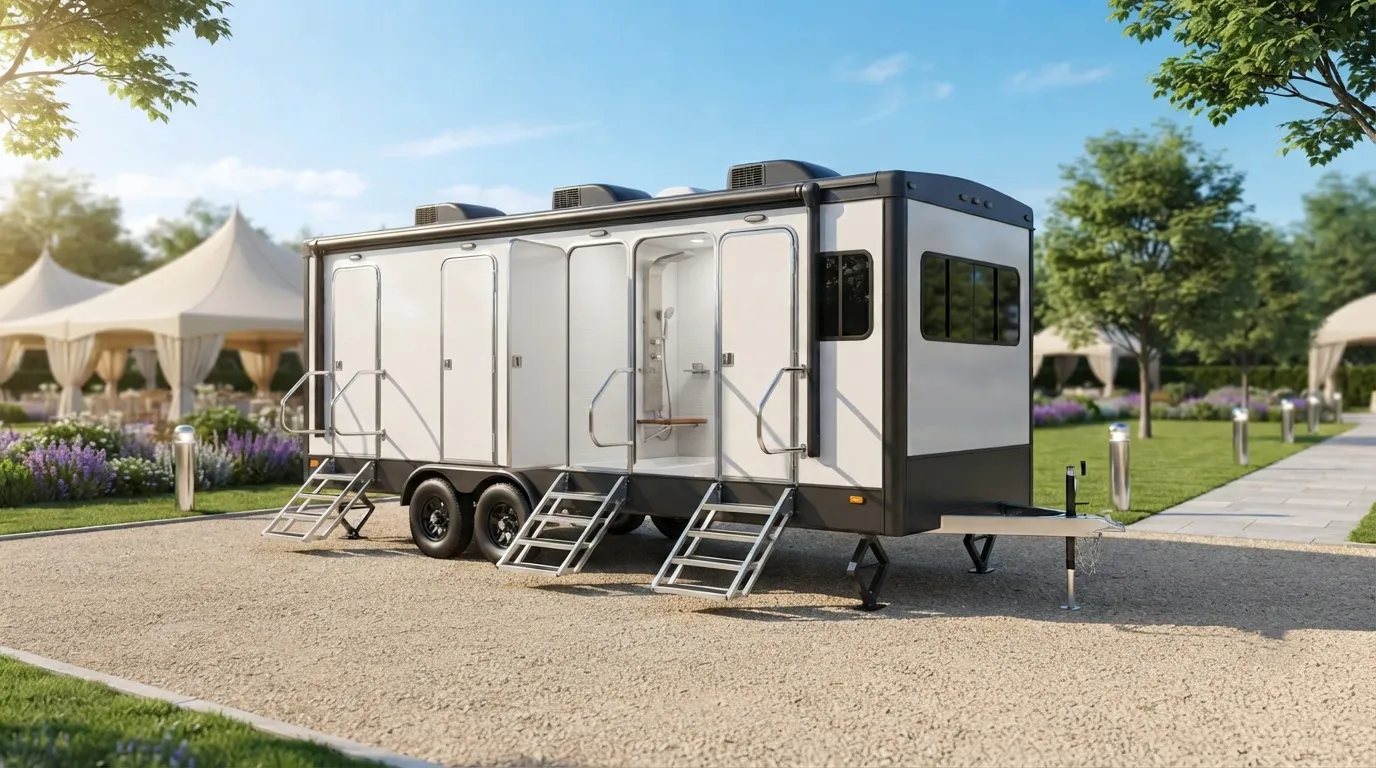
A deluxe flushable unit adds a small onboard freshwater tank and a foot pump or hand pump that pushes a rinse of water into the bowl before it drains into the same holding tank below. It still isn't plumbed to a sewer line, it just makes the flush motion familiar. That's the whole trick behind our deluxe flushable porta potty: fresh water in, waste and rinse water down into the same 60 to 70 gallon tank. These units run more than a standard box because of the extra tank and pump hardware, and they're a common upgrade for weddings and office events where guests expect a flush handle. Pair one with a portable sink rental or a handwashing station rental nearby and you've covered both washing and flushing without touching a building's water system. For anything higher-end, a luxury restroom trailer goes further with running water at multiple stations, which matters for wedding restroom rental bookings around Costa Mesa.
How does a portable sink work?
A portable sink runs on the same no-plumbing logic: a freshwater tank feeds the faucet, usually by foot pump or battery pump, and gray water drains into a separate holding tank underneath instead of a sewer line. Soap gets mounted right on the unit. This matters because 29 CFR 1910.141(d)(2) requires washing facilities to be stocked with soap and towels or a hand-drying device, and a hand sanitizer station alone does not satisfy that. Where crews are applying paints, coatings, herbicides or insecticides, OSHA 1926.51(f)(1) specifically calls for washing facilities, not just sanitizer. That's the gap our handwashing station rental and portable sink rental options are built to close on a Costa Mesa jobsite. If you only need sanitizer for light foot traffic at an event, a hand sanitizer station rental is the lighter option, but it won't cover a crew working with chemicals under OSHA rules. Full handwashing station requirements breaks down which standard applies to which job.
How do camping porta potties work?
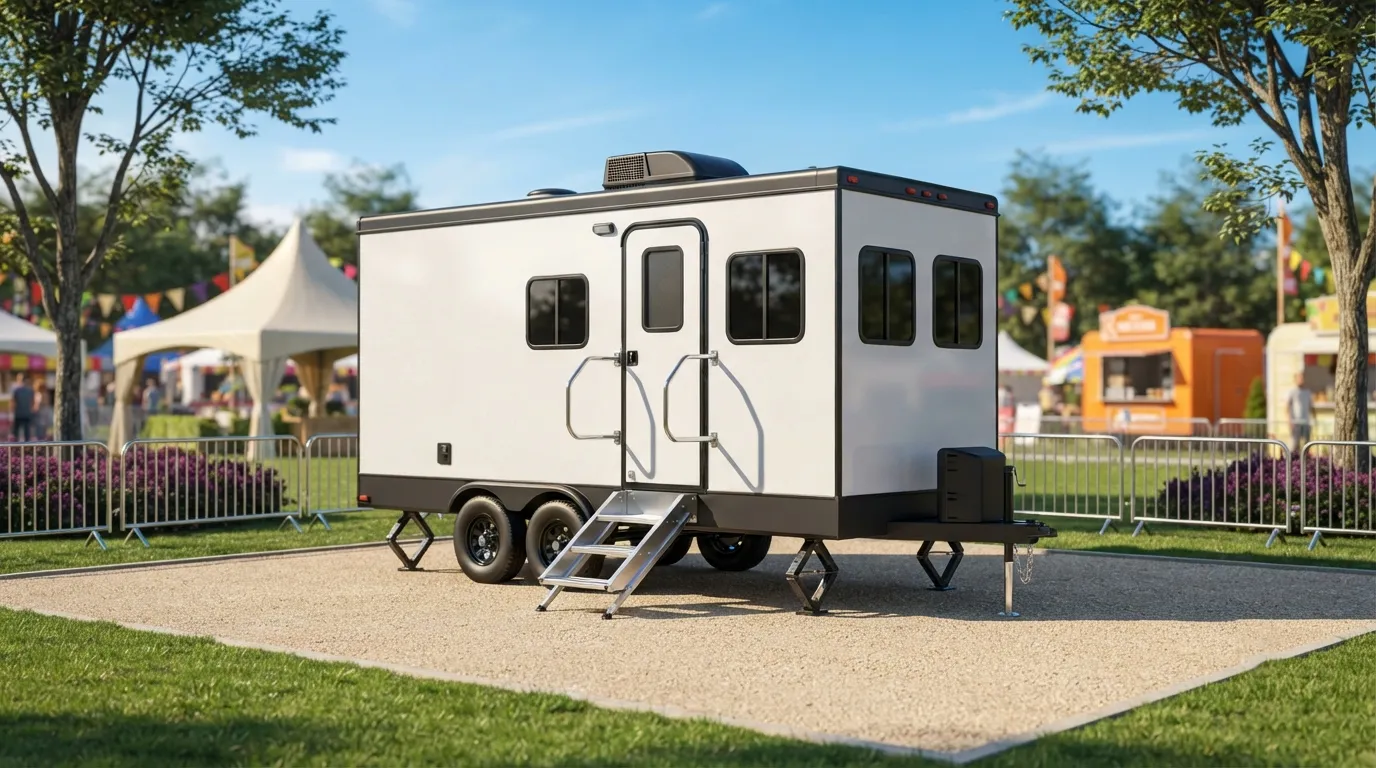
Same holding tank principle, smaller footprint. Camping and remote-site units still rely on that sealed tank and chemical breakdown, with no water or power needed on site, which is exactly why they show up at trailheads, farm properties, and disaster response staging. Our camping porta potty options run on the same service interval logic as a jobsite unit: ANSI/PSAI Z4.3 sets one weekly service visit as the baseline for up to 10 users over a 40 hour week, and we adjust that up for higher headcounts. For farm labor crews, OSHA 1928.110 requires field sanitation with potable water, toilets, and handwashing within a quarter mile walk of hand-labor employees, one facility per 20 workers, which is worth checking against our farm and agricultural restrooms page before a harvest season starts. Disaster and remote deployments get their own planning notes on disaster relief sanitation. Costa Mesa sites 8.8 miles from Midway City or 12.8 miles from Stanton get the same delivery and service radius as anything inside city limits.
Standard vs deluxe vs ADA: what's different inside the unit
| Feature | Standard | Deluxe | ADA |
|---|---|---|---|
| Tank | 60-70 gal | 60-70 gal plus freshwater tank | 60-70 gal |
| Flush | Pour/chemical only | Foot or hand pump flush | Pour/chemical only |
| Footprint | 44 x 48 in | Larger, hand wash included | Wider door, turning space |
| Typical day rate | $100-$350 | $85-$1200 | $200-$400 |
ADA Standards section 213.2 requires that where single-user units are clustered, at least 5 percent, and never fewer than one, must be accessible, with a 60 inch turning circle under 304.3.1 and a 32 inch clear door opening under 404.2.3. See our ADA accessible porta potty page for full specs.
How often does a porta potty get serviced?
ANSI/PSAI Z4.3 sets one weekly visit as the baseline for up to 10 users over a 40 hour week. Busy Costa Mesa jobsites or events with heavier traffic get serviced more often. Our how often are porta potties cleaned page covers scheduling by headcount.
What chemicals go in a porta potty?
A blue deodorizing and breakdown liquid, added at setup and topped off during each service visit. It's not the same product used in septic tank cleaning, and it stays inside the sealed tank, never touching soil or groundwater.
Do porta potties need water or electricity?
No. That's the whole point of the design. Standard and ADA units run entirely on the sealed tank and chemical system, which is why they work on raw lots before any temporary power pole or water line goes in.
How many porta potties does a construction site need?
OSHA 1926.51(c) sets ratios: one toilet for 20 or fewer workers, then additional fixtures as crew size grows. Our OSHA portable toilet requirements page runs the full table by headcount.
Can I rent just a portable sink without a toilet?
Yes. A portable sink rental stands alone for handwashing compliance under 29 CFR 1910.141(d)(2), commonly paired with existing restrooms on a Costa Mesa site that just needs added wash stations.
Next step
Get a delivery date
Tell us the address, the dates and the headcount. We size the order and confirm the route.